
What Determines the Value of a $2 Bill
Some 2 dollar bill worth much more than their face value due to specific technical traits and limited print runs.
Mistakenly viewing age as the main price factor prevents an accurate market analysis.
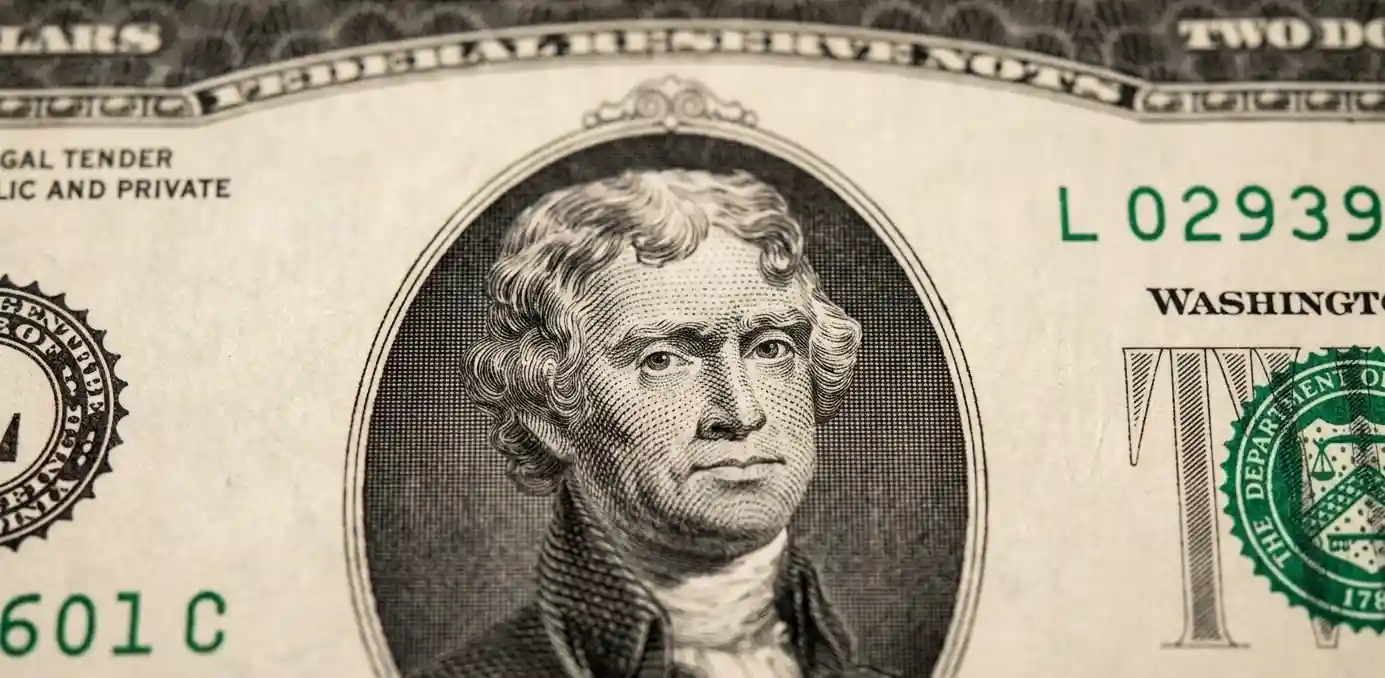
Modern specimens sometimes outprice antique notes from the 19th century.
Circulating $2 bills make up less than 1% of all US paper money.
Metric | Specification |
Item Weight | 1.0 gram |
Paper Mix | 75% cotton, 25% linen |
Large Size (Pre-1928) | 189 x 79 mm |
Small Size (Post-1928) | 156 x 66 mm |
Main Portrait | Thomas Jefferson |
Low print volume → shortage in daily cash trade → people keeping notes in private collections.
Note rarity correlates directly with seal colors and official signatures.
How Seal Colors and Serial Numbers Change the Price
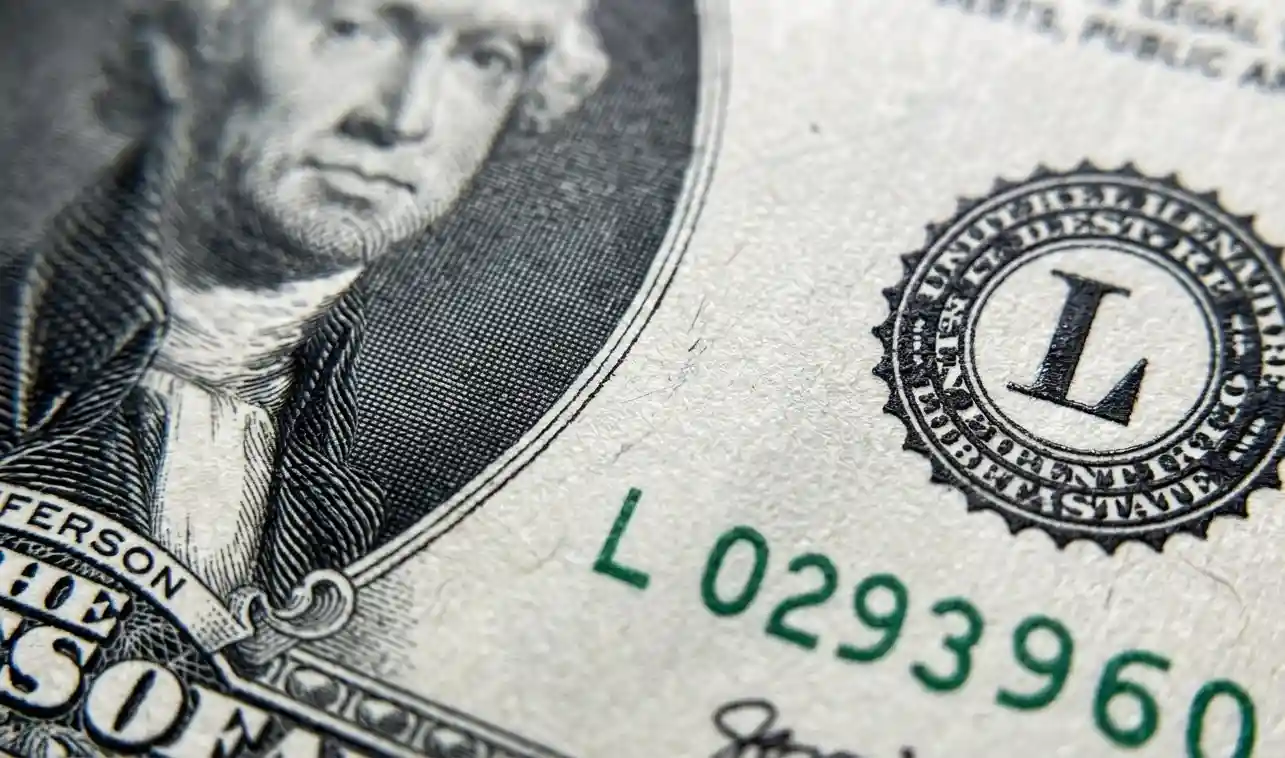
Treasury seal colors indicate the legal status of the money.
Red seals belong to United States Notes printed until 1966.
Blue seals mark Silver Certificates.
Gold seals were used for Gold Certificates.
Green seals appear on modern Federal Reserve Notes.
Specific serial number types and their market premiums:
Low numbers (00000001 to 00000100) → price jumps of 500-2000%
Radar numbers (reading the same forward and backward) → 150-300% premium
Star notes (replacements for damaged bills) → 50-500% price increase
Solid numbers (all digits the same) → 3000% increase or more
Auction data in 2026 shows a yearly price rise for rare numbers between 8% and 12%.
Common numbers without special patterns sell only for their face value.
Record Sales and Grading Categories
Actual sales recorded by major auction houses define the market.
Series / Type | PMG Grade | Price in US Dollars | Sale Date |
1862 First Obligation | 65 Gem Uncirculated | $35,000 | 2023 |
1869 Rainbow Note | 67 Superb Gem | $42,000 | 2024 |
1890 Treasury Note | 65 Gem Uncirculated | $160,000 | 2022 |
1918 Battleship Note | 68 Exceptional Paper | $12,000 | 2025 |
Series 1890 notes showing General James McPherson are the rarest.
Perfectly preserved items increase in value by 15% every two years.
Mechanical damage or folds are critical price killers.
A single fold can cut the price of a rare lot by 40-60%.
Professional Grading Structure (PMG)
Paper Money Guaranty certification sets the exact class of a bill.
The coin checker app scale runs from 1 to 70 points.
Evaluation steps:
Centering of the art on the paper.
Ink brightness and depth.
Absence of dirt or writing.
Sharpness of the corners.
Gaps between 63 and 67 points can equal thousands of dollars.
Investors buy notes only in clear plastic holders.
Protective plastic stops air and moisture from touching the paper.
Aging slows down → the investment stays safe for decades.
Modern Series: 1976 and Beyond
Many people think 1976 series bills are worth a lot of money.
Over 500 million of these bills were printed.
High supply → no rarity → price stays at face value.
Special post office stamps on the first day of issue are the only exception.
Stamping a 13-cent stamp on April 13, 1976, created a small collector niche.
Value of a stamped bill from a tiny town → $15-30.
Value of a standard 1976 bill → $2.
Price trends for common modern prints:
Inflation losses are 2.5% per year.
Collector value growth is 0% per year.
Holding regular modern $2 bills is not a good financial move.
Replacement Star Notes
A star at the end of a serial number marks a replacement for a damaged sheet.
The Bureau of Engraving and Printing cannot print the same number twice.
Error found → sheet removed → new sheet printed with a star symbol.
Star note numbers are always much lower than regular runs.
Market prices for 2013 series star notes (UNC grade):
New York Bank (B) → $5-10
Dallas Bank (K) → $15-25
Price gaps depend on how much that specific bank printed.
Lower supply from a specific bank → higher rarity for collectors.
The Impact of Rare Signatures
Each bill carries two names: the Secretary of the Treasury and the Treasurer of the US.
Admin changes mean new signature pairs on the money.
Short stays in office create rare series.
Rare pair example: Series 1928-E with Julian and Morgenthau → high price.
Series 1928-C with Julian and Morgenthau → extreme rarity.
Series 1928-C is 10 times rarer than Series 1928-D.
Printing Errors and Price Spikes
Factory mistakes are worth more than standard products.
Desired error types:
Misalignment (image is not centered)
Inverted printing on one side
Missing ink sections
Paper folds printed over with ink
A $2 bill with an image shift of over 5 millimeters is worth $200+.
Items with double-printed sides sell for over $1,500.
Finding a mistake in a stack has a 1 in 100,000 chance.
Spotting errors requires an app to scan coins for value for every sheet.
Bank Logistics and Handling
$2 bills are rarely used in automated systems today.
Most US ATMs do not dispense or take this value.
Lack of support stems from low use: Small volume → high costs to handle a separate cash box → no profit.
Costs to process 1,000 bills:
Sorting and checking for fakes: $1.20
Secure vault storage: $0.40 per month
Transport (1.0 kg weight): $0.85
Maintenance costs often eat the profit of using this rare value.
Comparing Silver Certificates
Until 1963, $2 bills could be backed by physical silver.
The "Silver Certificate" text promised a swap for coins or bars.
Values for 1899 "Agriculture" silver certificates:
VG (Very Good) grade → $120
VF (Very Fine) grade → $350
CU (Crisp Uncirculated) grade → $1,800+
Prices for these certificates rose 320% over 20 years.
Annual growth is 16% due to steady demand.
Spending these as regular money is impossible because of their high market value.




Leave a Comment