
1943 Nickel Value by Mint Mark and Composition
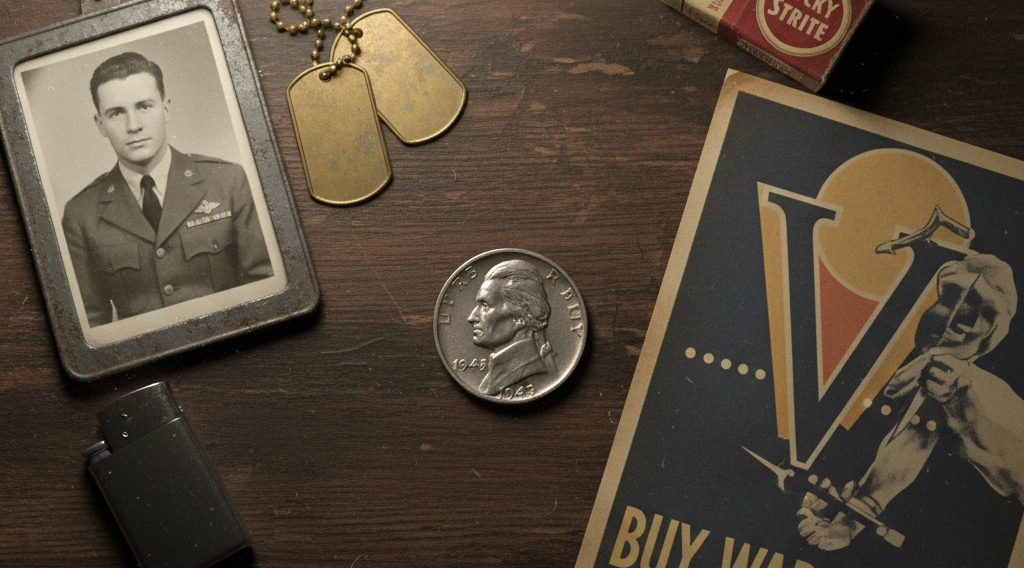
The issuance of five-cent coins in 1943 was carried out within a program saving strategic materials for the needs of the US defense industry.
According to legislative amendments adopted by Congress, the traditional copper-nickel alloy was replaced by a composition containing precious metals.
This decision allowed for the release of pure nickel required for producing armor steel and aircraft engine components.
Coins of this type, called "War Nickels" in numismatic literature, were produced during the period from October 1942 to December 1945.
A distinctive feature of the 1943 issue is the presence of a large mint mark located above the dome of the Monticello estate on the reverse.
The change in composition reflected the 1943 nickel value and led to alterations in the physical characteristics of the coin, including its weight and reaction to chemical environmental influences.
Component | Percentage Content |
Copper | 56% |
Silver | 35% |
Manganese | 9% |
The weight of the coin is 5.00 grams, with the pure silver content in each specimen equaling 1.75 grams.
The intrinsic value of the metal correlates directly with silver market quotes.
With silver priced at 25 dollars per ounce, the metal value in a single coin is approximately 1.40 US dollars.
Manganese, added to the alloy for giving the coin the electromagnetic properties of regular nickel, causes specific surface darkening over time.
Mintages and Classification by Mint Marks
In 1943, minting was performed at all three active US facilities.
For the first time in the history of American coinage, the "P" mark was officially applied to a coin, designating production in Philadelphia.
Mint Mark | Mint Facility | Mintage Volume |
P | Philadelphia | 271,165,000 |
D | Denver | 15,294,000 |
S | San Francisco | 104,060,000 |
The total mintage for 1943 amounted to 390,519,000 specimens, making these coins available in low preservation grades.
The Denver issue (1943-D) is the lowest mintage of the year, demonstrating higher price dynamics in Mint State condition.
Preservation and the "Full Steps" (FS) Factor
The market value of 1943 coins is determined by the Sheldon scale from 1 to 70, and can be determined with the coin value checker app.
A critical factor for evaluating specimens in MS65 condition and above is the striking clarity of the steps on the Monticello estate.
The "Full Steps" (FS) designation is assigned to coins having five or six fully separated step lines.
Lack of die contact or equipment wear led to the smoothing of these details, making FS specimens rare.
MS66 FS: The value of 1943-P samples in this grade varies from 50 to 80 dollars.
MS67 FS: The price increases to 350–500 dollars depending on the quality of the patina.
MS68 FS: Exceptional specimens valued at over 3,000 US dollars.
Auction Records and Price Dynamics
Studying auction results at Heritage Auctions allows for tracking the maximum price levels for each type of 1943 coin.
1943-P Jefferson Nickel: A record price was recorded for a specimen in PCGS MS68 FS grade, sold in 2023 for 14,400 dollars.
The annual value growth for top grades (MS67+) averaged 4.5% over the last decade.
1943-D Jefferson Nickel: In 2010, an MS68 specimen was realized for 3,738 dollars.
Statistics show a 12% price decrease for medium grades (MS65-66) over the last five years due to an increase in the number of certified coins in registries.
1943-S Jefferson Nickel: The record belongs to a coin in MS68 FS condition, sold for 9,000 dollars in 2021.
Market volatility for this mint facility reaches up to 18% per year, depending on the appearance of new lots at major auctions.
Minting Errors and 1943 Varieties
Technological features of wartime production led to the appearance of significant numismatic varieties.
1943-P Doubled Die Obverse (DDO): The most famous error of the year, characterized by clear doubling of the date and the inscription "LIBERTY".
An MS67 FS specimen of this variety was sold for 11,163 US dollars.
1943-P 3 over 2 (Overdate): An error occurring when using a 1942 master hub for producing 1943 dies.
The numeral "3" partially overlaps the numeral "2" in the date.
The value in MS66 condition is approximately 1,200 – 1,500 dollars.
1943-D 3 over 2: A similar error for the Denver mint, occurring less frequently than the Philadelphia one.
The price for an MS65 FS grade reaches 2,500 dollars.
Impact of Patina on Commercial Value
The 1943 silver alloy is subject to forming intense rainbow patina during long-term storage in original paper envelopes.
Specimens with aesthetically attractive patina trade at a premium of 50% to 200% over the basic catalog price.
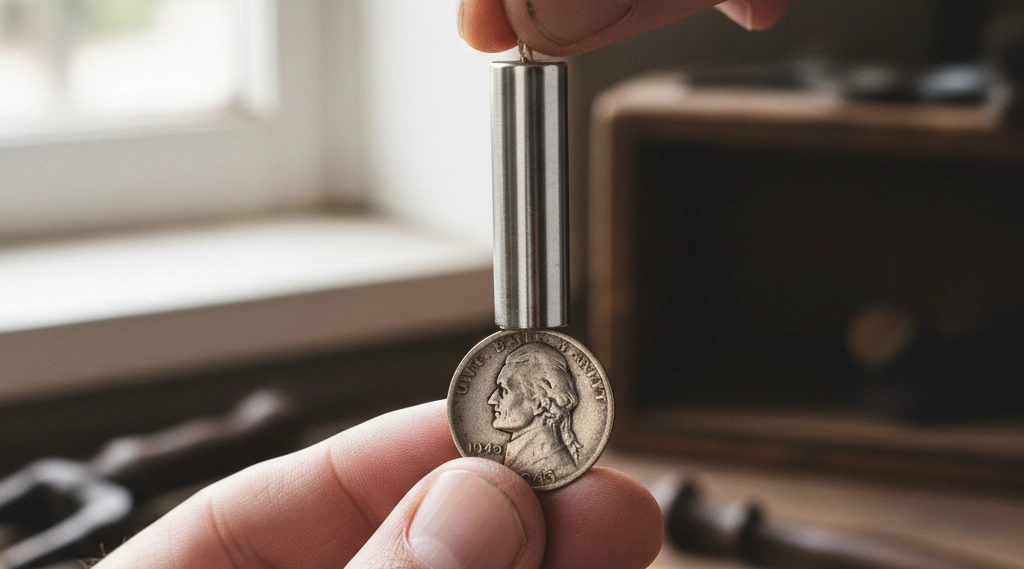
Black or dark gray patina, occurring due to high manganese content, reduces the coin's liquidity by 30–40%.
Professional dealers consider "eye appeal" as a separate coefficient when forming the price for auction lots.
Investment Potential and Liquidity
Liquidity for 1943 "War Nickels" in a coin identifier app, PCGS, and NGC slabs is assessed as high for MS64-MS66 grades.
The secondary market volume for these coins amounts to millions of dollars per year, providing a stable base for transactions.
For long-term investments, only positions with the Full Steps index in MS67 preservation and above are considered.
Statistical analysis of returns for the period 2000–2024 shows the following picture.
Ordinary coins (MS65 without FS): Value growth amounted to 22% over 24 years, being below the inflation rate.
Rare errors (DDO/Overdate): Value growth reached 145% during the same period.
Top MS68 grades: Growth reached 310%, demonstrating the best investment efficiency.
Methods for Identifying Counterfeits and Imitations
Attempts exist to create fake 1943 nickels by altering the mint mark on regular 1940s coins.
The primary sign of authenticity is the size and position of the mint mark.
On genuine 1943 coins, the mark (P, D, or S) has a significantly larger size, occupying the space between the top of the dome and the circular inscription.
Any 1943 coin without a mark above the dome is either a counterfeit or a Henning nickel (a famous mid-20th-century counterfeiter).
The weight of fakes often deviates from the 5.00-gram standard by more than 0.2 grams due to the absence of silver in the composition.






Leave a Comment